
No more reconstructing the live pipeline
Filter by stage, client, project type and due-date window, with tender values and submission status visible in the same register.
Run the pipeline from first opportunity through submission and outcome. Keep client, due date, value, takeoff, quote revisions, RFIs and follow-up attached to the tender—so the team always knows what is moving, what is exposed and what happens next.
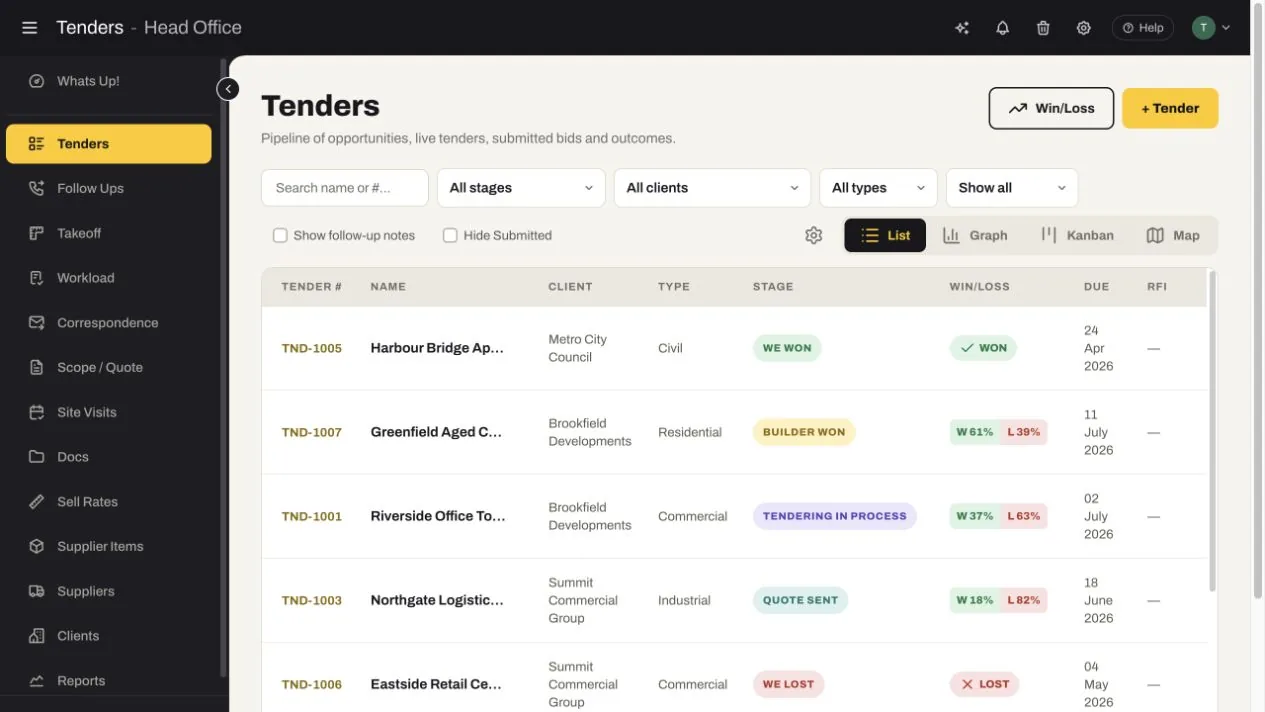
SubbieTRAC keeps the register and the work behind it together. Management gets portfolio visibility; estimators keep project context; delivery receives a traceable commercial baseline.
Filter by stage, client, project type and due-date window, with tender values and submission status visible in the same register.
See what is due, who is pricing it, the estimated effort and actual takeoff time before deadlines collide.
Quote revisions, takeoff progress, follow-ups, RFIs, site visits, photos and win/loss history remain attached to one project record.
Move between a stage-based board and a complete tender record without losing the client, deadline, value or commercial history that explains the decision.
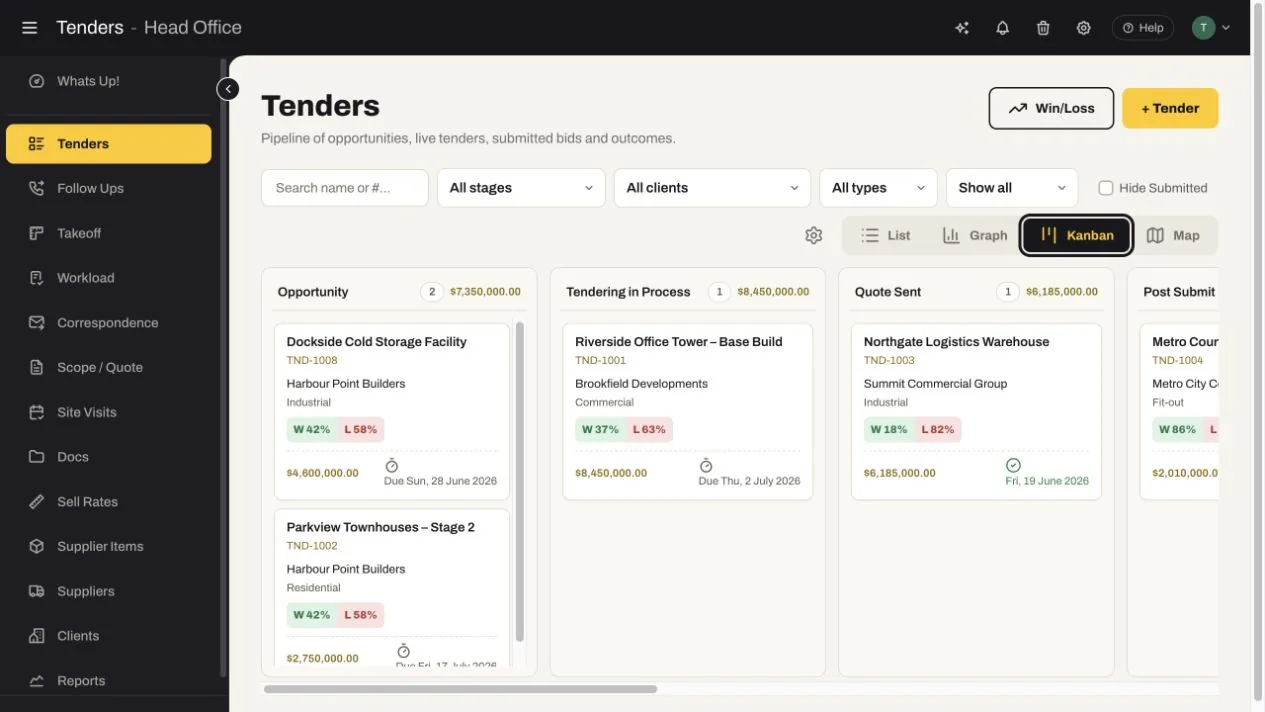
Totals by stage and tender-level win/loss signals make it easier to challenge the pipeline, focus the estimating team and decide where follow-up effort belongs.
The tender drawer brings project details, durations, quote revisions, takeoff, follow-up, RFIs, site intelligence and outcome tracking into one working context.
Open a tender from the register and review the client, site, due date, estimator, expected effort, current quote and notes. Tabs keep the supporting workflow within reach instead of scattering it across separate folders and systems.
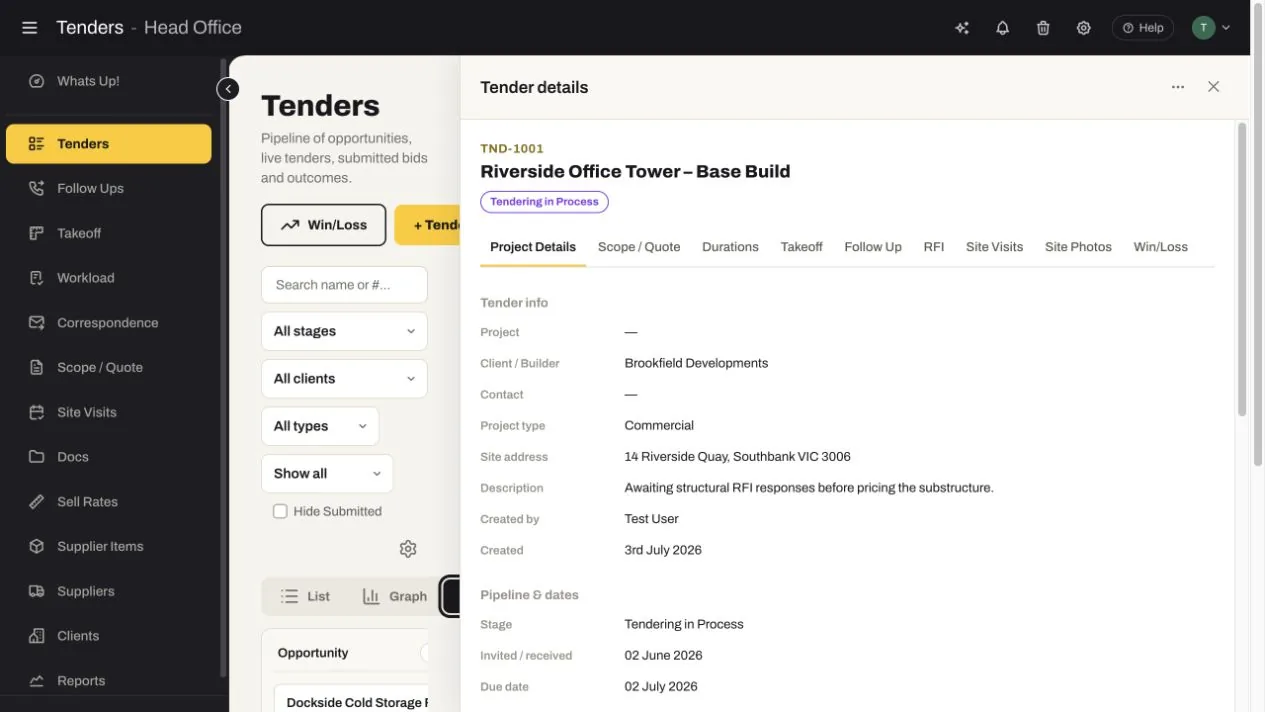
Every capability keeps the portfolio view connected to the project-level evidence behind it.
Track tender number, client, project type, stage, due date, submitted date, amount, quote and takeoff status in one view.
Use builder relationship, estimator history, project-type fit and pipeline stage as visible signals for bid review and follow-up.
See takeoff status, measured versions and time spent from the tender register and the individual tender record.
Keep the labour, materials and supplier catalogue used to build prices available to the tendering team.
Retain current and previous quote versions, status, amount and supporting reference documents with the tender.
Assign pricing responsibility, compare estimated effort with actual time and plan around tender due dates.
Keep post-submission contact, unanswered questions and the next action visible against the tender they affect.
Connect site visits, site photos, correspondence and documents to the commercial record instead of separate inboxes and folders.
The module guides the work through a repeatable sequence while keeping its tender, project and commercial context attached.
Decide whether the opportunity fits the business.
Capture the quantities and package detail.
Build labour, material and supplier allowances.
Confirm scope, risk and commercial position.
Carry the winning baseline into delivery.
One place to manage deadlines, takeoff, estimate, qualifications and revisions.
See what is being priced, why it fits and where estimating risk sits.
Receive the accepted scope, allowances, assumptions and procurement logic.
Move information forward instead of rebuilding it at every stage.
Walk through your tender, project and commercial process with us and identify where disconnected information is exposing time, cost or margin.